

Not Found
Digital Seminar

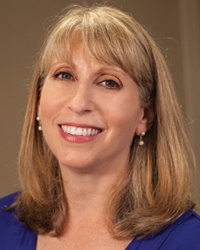
Module 2: Treating Self-Destructive Behaviors in Trauma Survivors with Lisa Ferentz


Average Rating:
   336
Faculty:
Lisa Ferentz, LCSW-C, DAPA
Duration:
2 Hours
Format:
Audio and Video
Copyright:
Jun 01, 2017
Product Code:
NOS096062_M2
Media Type:
Digital Seminar


Credit


* Credit Note - ***CE Details Can Be Found Under the First Module


Faculty

Lisa Ferentz, LCSW-C, DAPA's Profile

Lisa Ferentz, LCSW-C, DAPA Related seminars and products


Lisa Ferentz, LCSW-C, DAPA, is a recognized expert in the strengths-based, de-pathologized treatment of trauma and has been in private practice for over 40 years. She has been an adjunct faculty member at several universities, and is the founder of The Ferentz Institute, now in its seventeenth year of providing continuing education to mental health professionals and graduating several thousand clinicians from her two certificate programs in advanced trauma treatment. In 2009 she was voted the “Social Worker of the Year” by the Maryland Society for Clinical Social Work. She is the author of Treating Self-Destructive Behaviors in Trauma Survivors: A Clinician’s Guide, now in its second edition, Letting Go of Self-Destructive Behaviors: A Workbook of Hope and Healing and Finding Your Ruby Slippers: Transformative Life Lessons from the Therapist’s Couch.


Speaker Disclosures:
Financial: Lisa Ferentz maintains a private practice and is the founder and president of the Ferentz Institute. She receives royalties as a published author and is a consultant for Northwest Hospital. Lisa Ferentz receives a speaking honorarium and product royalties from Psychotherapy Networker and PESI, Inc. She has no relevant financial relationships with ineligible organizations.
Non-financial: Lisa Ferentz is a member of the National Association of Social Workers and the American Psychotherapy Association.


Objectives

  1. Investigate the relationship between, trauma, attachment, and affect regulation.
  2. Categorize the four attachment styles and their impact on a child’s cognitive and emotional development.
  3. Investigate the challenge of attaching to unavailable or abusive caretakers and the resulting need to take “ownership” of the abuse.
  4. Differentiate the manifestations of affect dysregulation and the impact of hypo-arousal and hyper-arousal.
  5. Determine five benefits to working with a strengths-based, de-pathologized perspective, including the impact this mindset has on the therapeutic relationship.
  6. Implement the concepts of trauma-re-enactment and the meta-communication of self-harm.
  7. Assess six reasons why clients engage in self-destructive behaviors.
  8. Investigate the “cycle of self-destructive behaviors.”
  9. Argue the role that dissociation plays in “priming the well” for self-destructive behaviors and implement at least three strategies to short-circuit dissociation.
  10. Utilize CARESS, an alternative to standard safety contracts, and analyze why standard safety contracts can be ineffective.
  11. Implement 6 creative strategies to help re-ground and re-establish a sense of safety and give a voice to trauma narratives in triggered clients.
  12. Interpret the recurring themes in the artwork of traumatized clients and integrate working with art into sessions.
  13. Diagnose three manifestations of counter-transference when working with self-destructive behaviors.
  14. Catalogue three clinical pitfalls to avoid when working with self-destructive behaviors.

Reviews

5
4
3
2
1

Overall:      4.9

Total Reviews: 336

Comments

James M - Brownsburg, Indiana

"This was the best workshop I have participated in 10 years. Would love more from Lisa"

Tania P - Falls Church, Virginia

"Extraordinarily good and useful program."

Mary R - Los Altos Hills, California

"I thought this was an excellent course, very well organized, very helpful"

Lisa B - Baltimore, Maryland

"great course! learned so much!"

Satisfaction Guarantee
Your satisfaction is our goal and our guarantee. Concerns should be addressed to: PO Box 1000, Eau Claire, WI 54702-1000 or call 1-800-844-8260.

ADA Needs
We would be happy to accommodate your ADA needs; please call our Customer Service Department for more information at 1-800-844-8260.

Please wait ...

Back to Top