

Purchasing the online quiz gives you immediate access to your CE Certificate upon successful completion. If you prefer to print the quiz and mail it in, you will have that option after you make this purchase. There is an additional charge for processing via mail.
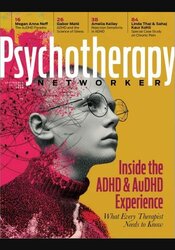
Magazine Quiz
September/October 2026: Inside the ADHD & AuDHD Experience: What Every Therapist Needs to Know
- Average Rating:
- 17
- Copyright:
- Sep 01, 2026
- Product Code:
- MGT095667
- Media Type:
- Magazine Quiz - Also available: Magazine Quiz

Description
Earn CE Credit For Reading Psychotherapy Networker Magazine
Read insightful articles and earn CE credit while gaining practical, clinically relevant insights into ADHD and AuDHD.
In this selection from the September/October 2026 issue of Psychotherapy Networker, leading voices in the field explore the realities and complexities of working with ADHD and AuDHD - offering perspectives that go beyond diagnostic labels to better understand the nuanced, relational, and varied experiences of neurodivergent clients.
The featured CE-eligible articles from this issue are:
- "ADHD and the Science of Stress: A Conversation with Gabor Maté" — Gabor Maté & Livia Kent
- "The AuDHD Paradox: Untangling a Complicated and Misunderstood Neurotype" — Megan Anna Neff
- "Countering Fears About the ADHD Label" — Cindy Goldrich
- "Helping Parents with Neurodivergent Kids: What Are Well-Meaning Therapists Getting Wrong?" — Donna Henderson & Sarah Wayland
- "Rejection Sensitivity in ADHD: Healing RSD in Group Therapy" — Amelia Kelley
- "ADHD from Girlhood to Perimenopause: What Are the Signs We Keep Missing?" — Terry Matlen
Credit
Target Audience
- Social Workers
- Psychologists
- Addiction Counselors
- Counselors
- Marriage & Family Therapists
- Nurses
- Other Professions
Objectives
- Analyze the neurobiological, relational, and hormonal factors that shape the onset, presentation, and course of ADHD and AuDHD across the lifespan.
- Evaluate the emotional and relational sequelae of ADHD and AuDHD — including rejection sensitivity, masking, and diagnostic identity — and their implications for case conceptualization and treatment planning.
- Apply neurodiversity-affirming, non-pathologizing clinical strategies when treating clients with ADHD/AuDHD and when working with the family systems and parents of neurodivergent children.
Reviews
| 5 |
|
| 4 |
|
| 3 |
|
| 2 |
|
| 1 |
|
Overall: 4.8
Total Reviews: 17
Satisfaction Guarantee
Your satisfaction is our goal and our guarantee. Concerns should be addressed to: PO Box 1000, Eau Claire, WI 54702-1000 or call 1-800-844-8260.
ADA Needs
We would be happy to accommodate your ADA needs; please call our Customer Service Department for more information at 1-800-844-8260.
Please wait ...