
Get immediate lifetime access to this content by purchasing the digital seminar/online course instead that you can access using a variety of devices, and one CE certificate is included with purchase! Click the “Digital Seminar” or "Online Course" link below to learn more!
DVD Purchasers please note: In order to view the content, you will be required to have a DVD player or a DVD drive on your computer. Your CE is a separate fee.
As an educator, you are faced with the challenge of meeting the social and emotional needs of all your students. This can be challenging enough with typical learners but it is even more difficult with those who have experienced trauma or have mental health challenges. Students who have experienced trauma often present as difficult to engage and display problematic behavior such as a low frustration tolerance, angry outbursts, or difficult social relationships. These behaviors all get in the way of teaching and learning. When a student has experienced trauma, he/she often spends much of the day in fight/flight/freeze mode which limits their capacity to learn. Their outwardly aggressive and irritable behaviors also disrupt the flow in the classroom, requiring your time and attention. Despite the amount of time you invest in behavior charts or incentives for good behavior, traditional behavioral approaches to classroom management and a punitive approach to discipline simply are not effective.
Join Dr. Reese in the recording and learn how a trauma-informed approach will greatly reduce challenging behavior, improve student engagement and increase learning outcomes. Finish this program with new strategies, tools, and resources to reduce students’ impulsiveness, aggressive behaviors, and inattention and increase their focus, attention, and compassion. While this positive approach is absolutely essential for students with trauma, it will also greatly benefit each and every student in your classroom. Return to your school with:
Save time and money off other submission methods – purchase & take the CE test online for $29.99. Additional processing fees apply for other submission methods (i.e. mail, fax, etc.). Please contact our Customer Service at 1-800-844-8260 for more details. Listed below are the continuing education credit(s) currently available for this non-interactive self-study package. Please note, your state licensing board dictates whether self-study is an acceptable form of continuing education. Please refer to your state rules and regulations. If your profession is not listed, please contact your licensing board to determine your continuing education requirements and check for reciprocal approval. For other credit inquiries not specified below, please contact cepesi@pesi.com or 800-844-8260 before completion.
Certificates of Successful Completion are available for email, download and/or printing from your online account immediately following the successful completion of the post-test/evaluation.
**Materials that are included in this course may include interventions and modalities that are beyond the authorized practice of your profession. As a licensed professional, you are responsible for reviewing the scope of practice, including activities that are defined in law as beyond the boundaries of practice in accordance with and in compliance with your profession's standards. For Planning Committee disclosures, please statement above. For speaker disclosures, please see the faculty biography. For speaker disclosures, please see the faculty biography.
| File type | File name | Number of pages | |
|---|---|---|---|
| Manual - Trauma-Informed Compassionate Classrooms (1.12 MB) | 66 Pages | Available after Purchase | |
| Text Document | Illinois Educators Self-study Instructions (0.02 MB) | Available after Purchase | |
| Illinois Educators Evaluation Form (1.17 MB) | Available after Purchase | ||
| Instructions for ASHA credit - Self Study (64.4 KB) | Available after Purchase | ||
| CE Test – 053350 – Paper Option (255.9 KB) | Available after Purchase | ||
| Text Document | PA Educator Instructions (15.3 KB) | Available after Purchase |
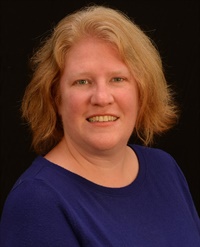
Christina Reese, PhD, LCPC, has been working with children impacted by trauma and their families for the last 20 years. She is a licensed clinical counselor in Maine, Maryland, and Pennsylvania and is a licensed clinical supervisor. Dr. Reese is an internationally recognized trainer for mental health professionals in creating trauma-informed schools, working with mental health in the classroom and attachment and trauma in children. She is a TBRI practitioner and owns Felicity Counseling Services. Dr. Reese authored the books Attachment, Puzzle Pieces, The Attachment Connection, Trauma and Attachment, The Socially Confident Teen, and Leveling Up.
Speaker Disclosures:
Financial: Dr. Christina Reese maintains a private practice and has an employment relationship with Sheppard Pratt Health System. She receives royalties as a published author. Dr. Reese receives a speaking honorarium, recording, and book royalties from PESI, Inc. She has no relevant financial relationships with ineligible organizations.
Non-financial: Dr. Christina Reese has no relevant non-financial relationships.
Access never expires for this product.
| 5 |
|
| 4 |
|
| 3 |
|
| 2 |
|
| 1 |
|
Satisfaction Guarantee
Your satisfaction is our goal and our guarantee. Concerns should be addressed to: PO Box 1000, Eau Claire, WI 54702-1000 or call 1-800-844-8260.
ADA Needs
We would be happy to accommodate your ADA needs; please call our Customer Service Department for more information at 1-800-844-8260.
Please wait ...
