

Book
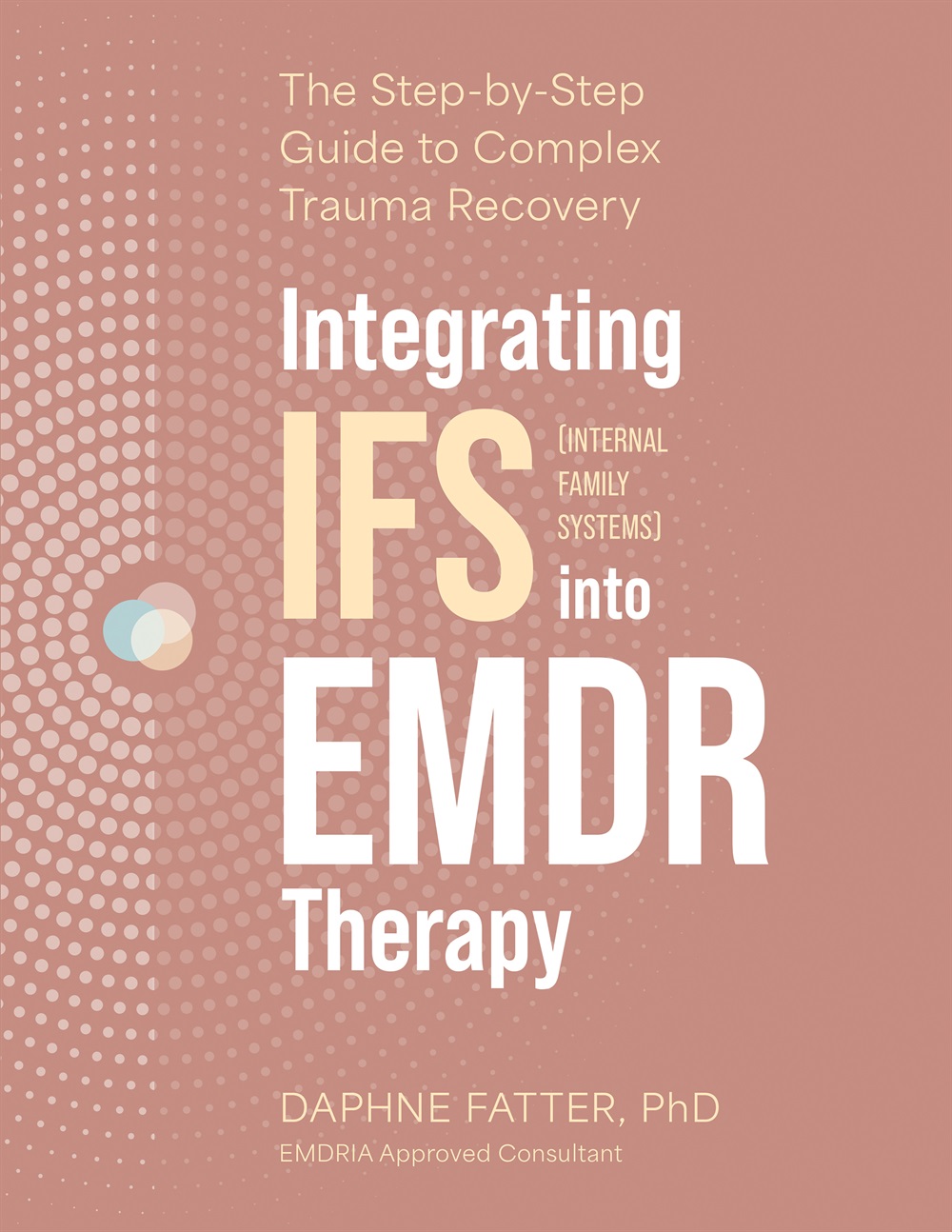
Integrating IFS (Internal Family Systems) into EMDR Therapy
The Step-by-Step Guide to Complex Trauma Recovery
- Average Rating:
- Not yet rated
- Author:
- Daphne Fatter, PhD
- Copyright:
-
2026
- Publication Date:
- Jan 27, 2026
- Publisher:
- PESI Publishing
- Product Code:
- PUB089805
- ISBN13:
- 9781683738855
- Format:
- Paperback
- Number of Pages:
- 250
- Media Type:
- Book

Description
Clients with complex trauma often struggle with avoidance, dissociation, and increased symptoms during EMDR, making it difficult to support their sense of control and safety across treatment. In these cases, slower is faster, but how do you slow things down when EMDR is designed as an accelerated approach?
By integrating IFS into EMDR, which enhances your ability to target symptoms in a more attuned and scaffolded way.
That is what you’ll learn in this step-by-step guide, which is intended not only for EMDR and IFS clinicians, but for any provider who serves clients with a trauma history. Featuring case examples, handouts, worksheets, therapist scripts, and more, you’ll learn how to:
- Use parts mapping to support stabilization and treatment planning in phase 1
- Befriend protector parts in phase 2 and receive their consent to proceed with processing
- Move through blocked reprocessing by restoring the Self-to-part connection in phases 3 and 4
- Invite parts to “try on” positive qualities and cognitions in phase 5
- Use somatic approaches to befriend parts in the body during phase 6
- Facilitate inclusion and closure for protective parts during phase 7
- Respect the client’s system before returning to or beginning a new target in phase 8
Trauma treatment is not one size fits all. Some client parts will be more accessible with IFS, while others will be more easily discovered through EMDR. By using both approaches, you can better tailor trauma treatment for your clients, meeting them exactly where they (and their internal systems) are.
Credit
Author

Daphne Fatter, PhD Related seminars and products
Daphne Fatter, PhD, is a licensed psychologist, clinical consultant, author, and international speaker specializing in integrative trauma-informed therapies. She is the author of Integrating Internal Family Systems Interventions into EMDR Therapy and is widely recognized for her expertise in blending parts work with evidence-based trauma modalities. Dr. Fatter is EMDR certified, an EMDRIA approved consultant, and has over twenty years of experience providing trauma treatment. As a certified ancestral healing practitioner, she also supports clients and clinicians in addressing intergenerational and historical trauma. Dr. Fatter earned her Master of Arts in transpersonal counseling psychology from Naropa University and her doctorate in counseling psychology from Pennsylvania State University. She completed a postdoctoral fellowship in clinical psychology at The Trauma Center under the direct supervision of Dr. Bessel van der Kolk, MD. She previously served as the military sexual trauma coordinator at the Fort Worth VA Outpatient Clinic and has extensive experience providing training to mental health providers serving the military. Her published works span the areas of Internal Family Systems therapy, EMDR, countertransference, mindfulness, and ancestral healing.
Grounded in the understanding that traumatic stress is multilayered – relational, developmental, biological, cultural, systemic, collective, historical, and spiritual – Dr. Fatter brings a neuroscience-based, compassionate, humble, and skills-based approach to professional education. She offers engaging workshops, webinars, and trainings on a range of trauma-related topics, including PTSD, complex trauma, complicated grief, and divorce recovery. Dr. Fatter is based in Dallas Texas where she balances her clinical practice with parenting her three children. Learn more at www.daphnefatterphd.com.
Speaker Disclosures:
Financial: Dr. Daphne Fatter maintains a private practice. She receives a speaking honorarium and recording royalties from Psychotherapy Networker and PESI, Inc. She has no relevant financial relationships with ineligible organizations.
Non-financial: Dr. Daphne Fatter is a member of the American Psychological Association, the EMDR International Association, and the Texas Psychological Association.
Additional Info
Endorsement“With warmth and clinical precision, Dr. Fatter invites the reader into a model of trauma recovery that is at once structured and profoundly respectful of human complexity. This book will transform the way you think about integrating modalities – and about the people you serve.”
- Frank Anderson, MD, author of Transcending Trauma and coauthor of Internal Family Skills Training Manual
“Dr. Daphne Fatter illuminates the natural harmony between IFS and EMDR therapies. Her integrative model invites clinicians into a deeper relational presence where parts are honored, the nervous system is regulated, and healing unfolds organically. This book is both a guide and a gift – offering the field a framework rooted in compassion, wisdom, and respect for the sacredness of trauma recovery.”
- Stacy Ruse, LPC, E-RYT-500, EMDR and IFS trainer and consultant
“Daphne Fatter’s Integrating IFS (Internal Family Systems) into EMDR Therapy is an essential resource for trauma therapists seeking to enhance their practice and deepen their healing skills. This comprehensive guide skillfully bridges the gap between EMDR and IFS therapies, providing clear, practical strategies for integrating these powerful and complementary modalities. Fatter’s insights into complex trauma recovery are invaluable, offering a nuanced understanding of the interplay between parts and the Self, which is crucial for effective treatment. The step-by-step approach, complete with the therapist worksheets and scripts, makes it accessible for clinicians at all levels. Fatter’s emphasis on consent-based interventions and the importance of attunement to clients’ internal systems ensures that therapists can create a safe, supportive environment for healing. This book is a must-read for anyone committed to advancing their therapeutic skills in trauma recovery.”
- Dr. Gillian O’Shea Brown, author of Psyche’s Awakening: A Path to Healing through the Wisdom of Greek Myth
“In this well-written book, Daphne Fatter solves the problem of how to integrate EMDR and IFS therapies thoroughly and elegantly. The former is typically viewed as one of the world’s few gold-standard, highly researched treatments for PTSD, while the latter is an increasingly popular paradigm-shift model of therapy that is used for PTSD, among other diagnoses, and is growing a significant body of research with positive outcomes. Whether you’re trained in one and want to add the other or you’re trained in both and want to use them together, this book will be a great guide.”
- Martha Sweezy, PhD, coauthor of Internal Family Systems Skills Training Manual
“This book is an important step in the unfolding history of parts work beginning with John G. Watkins through myriad contributors. It will be an important volume for those EMDR therapists with an IFS orientation in guiding the integration of those methods.”
Sandra Paulsen, PhD, author of Looking Through the Eyes of Trauma and Dissociation and When There Are No Words
“Dr. Daphne Fatter has written the book that trauma therapists have been waiting for. Integrating IFS (Internal Family Systems) into EMDR Therapy masterly synthesizes two highly effective therapeutic modalities, offering clinicians a clear, practical roadmap for working with complex trauma. What makes this work exceptional is Dr. Fatter’s ability to honor the integrity of both EMDR and IFS therapies while demonstrating how their integration creates something greater than the sum of its parts. She provides concrete protocols, session transcripts, and troubleshooting guidance that clinicians can implement immediately, addressing the critical challenges of working with dissociation, protective parts, and attachment wounds. This book is essential reading for any clinician committed to providing the most effective trauma care possible. Dr. Fatter has given us a practical, theoretically sound, and deeply humane approach to healing.”
- Jenna Riemersma, LPC, certified IFS therapist, IFS clinical consultant, EMDR trained therapist, and bestselling author of Altogether You and IFS Integration
“Finally, we have the book that weaves EMDR and Internal Family Systems therapies into a nuanced, effective whole treatment model. Drawing on the strengths of both, Daphne provides us with handouts, worksheets, and scripts to help us turn theory into healing for our most complex clients. She includes lots of love for the therapists doing this challenging work too. Brilliant!”
-Colleen West, LMFT, IFS clinical consultant and author of We All Have parts and The IFS Flip Chart
“This well-organized and insightful guide provides clinicians with a clear, step-by-step framework for integrating IFS therapy into EMDR practice – an essential resource for therapists seeking to deepen and broaden their clinical effectiveness.”
- Roy Kiessling, LISW, founder of EMDR Consulting
“This book represents a timely and essential new contribution to the field of trauma therapy. Daphne has created something we have desperately needed: a clear, practical roadmap for combining two of the most sought-after and effective trauma treatments available today. As a therapist who uses both modalities extensively, I’ve seen firsthand how effective – and at times tricky - this integration can be. Daphne distills down the most important principles of each model, addressing the nuances and potential pitfalls of combining them. If you want to learn how to integrate IFS and EMDR therapies seamlessly and safely, this is the book for you. It’s destined to become the go-to manual for trauma therapists committed to offering their clients the best that both approaches have to offer.”
- John Clarke, MA, EdS, LPCC, trauma therapist and host of the Going Inside podcast
Integrating IFS (Internal Family Systems) into EMDR Therapy is exactly what it promises to be. It’s not a book to be summarized in one sentence, but, if I felt like trying, I’d say it’s a book that answers the question ‘I’ve learned these two powerful treatment models; how do I combine them?’ Or perhaps the question ‘I know EMDR, but sometimes it doesn’t work – would IFS therapy help, and do I need that training too?’ Yes, I’d say, but if you know something about it, or know something about working with parts, here’s a book that can enhance your knowledge and help you use what you know to add dimensions to your use of EMDR! It is a book to be savored and to keep by your side in case you have a question about what to do when stubborn looping doesn’t resolve with EMDR interweaves, when there are issues of neurodiversity and working with marginalized populations, when you as a therapist are stuck and experiencing countertransference, and more. I like books that provide clarity about options, and this one does this with illustrations, examples, and essential worksheets. It’s an enriching time to be a therapist, when models that are wonderful in their own right can be used individually when that works and can be combined in ways that enhance the opportunity for our clients to heal more comprehensively and effectively.”
- Joanne Twombly, MSW, LICSW, author of Trauma and Dissociation Informed Internal Family Systems: How to Successfully Treat Complex PTSD and Dissociative Disorders
Reviews
Satisfaction Guarantee
Your satisfaction is our goal and our guarantee. Concerns should be addressed to: PO Box 1000, Eau Claire, WI 54702-1000 or call 1-800-844-8260.
ADA Needs
We would be happy to accommodate your ADA needs; please call our Customer Service Department for more information at 1-800-844-8260.
Please wait ...