

This program is no longer active, however there are other versions of this program in which you may be interested.
2-Day Anxiety Certification Masterclass: Brain-Based Strategies for Panic, Agoraphobia, Social Anxiety, GAD, OCD & PTSD, 4/4/2024 12:00:00 AM EDT, Digital Seminar More info »
2-Day Anxiety Certification Masterclass: Brain-Based Strategies for Panic, Agoraphobia, Social Anxiety, GAD, OCD & PTSD, 4/4/2024 12:00:00 AM EDT, Digital Seminar More info »
Digital Seminar
Purchase Additional Participant CE »

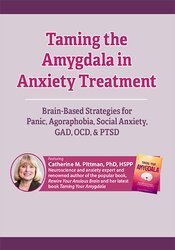
2-Day Taming the Amygdala in Anxiety Treatment: Brain-Based Strategies for Panic, Agoraphobia, Social Anxiety, GAD, OCD, & PTSD
- Average Rating:
- 7
- Faculty:
- Catherine Pittman, PhD, HSPP
- Duration:
- 12 Hours 26 Minutes
- Format:
- Audio and Video
- Copyright:
-
Aug 25, 2022
- Product Code:
- POS058945
- Media Type:
- Digital Seminar - Also available: Digital Seminar
Description
When clients don’t realize that there are brain-based reasons for your recommendations of exposure therapy, relaxation techniques, and lifestyle changes, they are less likely to make the changes they need to master their fear and worry.
If you want to be successful at helping your clients manage their anxiety, the amygdala is the most important part of the brain to understand!
Watch neuroscience and anxiety expert Catherine M. Pittman, PhD, HSPP, as she guides you through what’s happening in the brain and body when a client has anxiety.
You’ll learn the essential tools and techniques, backed by neuroscience, to teach clients how to use their amygdala as a vehicle to reduce anxiety and worry. Dr. Pittman will provide easy-to-implement, practical applications to therapy that will change your clients’ brain and not simply decrease their anxiety.
You’ll learn how to:
- Assess anxiety from a neuroscience perspective
- Increase client engagement through brain-based goal setting
- Train your client’s amygdala to respond differently to anxiety
- Empower clients to recognize anxiety-igniting cognitions from the cortex
Not only will you learn the essential keys for successful anxiety treatment, Dr. Pittman will share tools and exercises from her workbook, Taming Your Amygdala, that you can use with clients.
You don’t have to be a neuroscientist to help your clients understand how their brains work! Purchase today to help your clients tame their amygdalas!
Credit

Alternate Options
|
2-Day Anxiety Certification Masterclass: Brain-Based Strategies for Panic, Agoraphobia, Social Anxiety, GAD, OCD & PTSD
Copyright: 04/04/2024 - Product Code POS059668 |
Additional Info
Access for Self-Study (Non-Interactive)Access never expires for this product.
For a more detailed outline that includes times or durations of time, if needed, please contact cepesi@pesi.com. ** no”Access to Self Study” tab available.
Questions?
Visit our FAQ page at www.pesi.com/faq or contact us at www.pesi.com/info
Objectives
- Evaluate the role of the amygdala in defending clients from danger and creating anxiety-producing memories for purposes of client psychoeducation.
- Utilize the language of the amygdala and how it learns to improve client level of functioning.
- Support client motivation and engagement via use of the language of the amygdala.
- Demonstrate why both the amygdala and cortex pathways in the brain must be treated for maximum relief of anxiety symptoms.
- Assess and identify where client’s anxiety begins and help them interpret their fight, flight, freeze response.
- Construct interventions to help train client’s amygdala to respond differently to anxiety and fear.
- Demonstrate the connection of client’s amygdala to anxiety symptoms for treatment planning purposes.
- Evaluate the relationship of the cortex to the amygdala as it relates to treatment outcomes.
- Utilize exposure techniques to increase client’s tolerance to anxiety and retrain the amygdala.
- Determine how clients label their anxiety-related experiences.
- Employ neurologically informed strategies such as relaxation, exercise, exposure, and sleep interventions to reduce anxiety symptoms.
- Utilize neurologically informed strategies such as cognitive restructuring techniques to reduce cognitions that produce anxious responding.
Outline
THE AMYGDALA AS A VEHICLE TO REDUCE ANXIETY
Teach Clients How & Why They Experience Anxiety
Amygdala’s Role in Defending Us from Danger & Creating Anxiety-Producing Memories
- Make neuroscience accessible
- How the amygdala learns
- The language of the amygdala
- Lifestyle changes that calm the brain
- Importance of questioning the necessity of fear & anxiety response
Promote Client Motivation & Engagement
Essential Knowledge About Using the Amygdala in Therapy
- Anxiety symptoms as a window into amygdala functioning
- The pitfalls of avoiding anxiety: Case example
- Introduce clients to their amygdala: Worksheets, explanations, examples
- Connect amygdala to client concerns
Teach Client’s Where Their Anxiety Comes From
Two Brain Pathways that Produce Anxiety
- Triggering of emotion: Amygdala
- Generation of emotion: Cortex
- Help clients recognize their two pathways: Useful examples
- How anxiety is initiated in each pathway & how they influence each other
- Why both pathways need to be understood & treated for maximum relief
THE AMYGDALA IN TREATMENT OF ANXIETY: PUTTING IT ALL TOGETHER
Personalize and Select Which Client Goals to Focus On
Connect Client’s Amygdala to Goal Setting: Examples
- Find the client’s amygdala in their experiences
- How clients label their anxiety-related experiences
- Guidelines to draw out and identify goals
- How/where anxiety/worry interferes with client goals
- The value in client’s complaining about their life
Exposure Techniques to Increase Tolerance to Anxiety
How to Retrain the Amygdala
- Teach clients to communicate with their amygdala
- Importance of SUDS ratings for communicating with clients
- Seven general guidelines for exposure
- Six tips for exposure effectiveness
Amygdala-Focused Interventions
How to Stop Scaring the Amygdala
- The type of relaxation that calms the amygdala
- The type of sleep that calms the amygdala
- How yoga calms the amygdala
- The type of exercise that calms the amygdala: Case example
- Exposure interventions that teach the amygdala: Case example
Cortex-Focused Interventions
How to Stop the Cortex from Activating the Amygdala
- Cognitive approaches to target the cortex
- Remember “survival of the busiest” rule
- You can’t erase, you must replace
- The amygdala watches cortex television
- Change the channel in the cortex
Limitation of Research and Potential Risks
Target Audience
- Social Workers
- Psychologists
- Physicians
- Counselors
- Marriage and Family Therapists
- Case Managers
- Addiction Counselors
- Speech-Language Pathologists
- Therapists
- Nurses
- Occupational Therapists
- Other Mental Health Professionals



Reviews
| 5 |
|
| 4 |
|
| 3 |
|
| 2 |
|
| 1 |
|
Overall: 5
Total Reviews: 7
Satisfaction Guarantee
Your satisfaction is our goal and our guarantee. Concerns should be addressed to: PO Box 1000, Eau Claire, WI 54702-1000 or call 1-800-844-8260.
ADA Needs
We would be happy to accommodate your ADA needs; please call our Customer Service Department for more information at 1-800-844-8260.
Please wait ...