

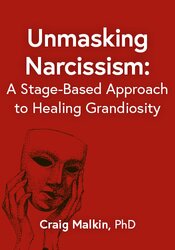
Digital Seminar
Unmasking Narcissism
A Stage-Based Approach to Healing Grandiosity
- Average Rating:
- 347
- Faculty:
- Craig Malkin, PhD
- Duration:
- 2 Hours 03 Minutes
- Format:
- Audio and Video
- Copyright:
-
Mar 20, 2026
- Product Code:
- NOS096683
- Media Type:
- Digital Seminar

Description
Many clinicians struggle to treat narcissism because it’s so often misunderstood—and in the case of covert narcissism, frequently overlooked. More troubling still, this lack of understanding often leaves therapists unprepared for the deeper work: helping narcissists of all stripes take responsibility for the damage they do in both love and life. But if you know what to look for, there are inflection points: moments that can make or break the treatment. Once you learn to spot them, working with even the most defensive or combative clients becomes far easier—and far less daunting. Drawing on recent research and new insights into covert narcissism, this workshop offers practical strategies for growth and transformation in narcissistic clients. You’ll discover:
- A four-stage model for reducing defensiveness and reaching narcissistic clients, whether they're aggressively bombastic or quietly withdrawn.
- Powerful tools to help narcissistic clients express emotion and form secure attachments.
- How to avoid common therapeutic pitfalls and foster genuine connection—even with the most challenging presentations
Credit
Faculty

Craig Malkin, PhD Related seminars and products
Craig Malkin, PhD, is a Harvard Medical School lecturer and clinical psychologist who specializes in the treatment of narcissism and echoism. His work has been widely featured, including in Time, The New York Times, NPR, and CBS. His internationally acclaimed book, Rethinking Narcissism, was twice named by the Oprah Winfrey Network as one of the most important books on narcissism.
Speaker Disclosures:
Financial: Craig Malkin has employment relationships with Harvard Medical School and YM Psychotherapy and Consultation Inc. He receives royalties as a published author. Craig Malkin has no relevant financial relationships with ineligible organizations.
Non-financial: Craig Malkin is an author and presenter for Psychotherapy Networker. He is a member of the American Psychological Association, the Massachusetts Psychological Association, and the International Centre for Excellence in Emotionally Focused Therapy.
Additional Info
Access for Self-Study (Non-Interactive)Access never expires for this product.
Questions?
Visit our FAQ page at www.pesi.com/faq or contact us at www.pesi.com/info
Objectives
- Identify the core psychological mechanism underlying all forms of narcissism, demonstrating awareness of its implications in therapy.
- Distinguish among various forms of narcissism based on key behavioral, emotional and relational patterns.
- Select appropriate interventions to activate blocked or latent emotional capacity in narcissistic clients
Outline
Understanding the Inner World of Someone with Covert Narcissism
- Introduce covert narcissism as a defense against shame, not a lack of emotion.
- Highlight how emotional invisibility, longing, and fear contribute to an overreliance on self-enhancement as a survival strategy.
- Clarify how fear of rejection and unmet attachment needs shape defensive patterns in clients.
Reducing Anxiety to Soften Defenses
- Teach how to help clients track anxiety in their bodies to lower defensive rigidity.
- Use of “What would you feel if you weren’t anxious?” to promote deeper emotional access.
- Link physiological regulation (e.g., reduced tightness in chest) to increased openness and trust.
- Emphasize that somatic anxiety tracking is a prerequisite to accessing more vulnerable states.
From Content to Process: Deepening the Therapeutic Relationship
- Redirect focus from external complaints to the emotional experience in the room..
- Model attuned responses (e.g., “Your eyes look sad—I can see how much it hurt to hear that.”) to build attachment security.
- Use evocative prompts to invite clients to reflect on their experience of the therapist (e.g., “What do you feel from me as you tell me about this?”).
- Demonstrate how presence, attunement, and empathic witnessing help reduce grandiosity and underlying fear.
Creating Corrective Attachment Experiences
- Invite memory-based imagery to separate client identity from narcissistic defenses.
- Use imagined reparenting (e.g., “Can you see that six-year-old?”) to access disowned sadness, fear, or longing.
- Provide opportunities for clients to receive care and validation in real-time with the therapist.
- Help clients shift from proving worth through performance to allowing authentic connection.
Limitations of the Research and Potential Risks
- Lack of longitudinal data on covert narcissism treatment outcomes.
- Difficulty in engaging clients with extreme defenses or comorbid disorders.
- Risk of retraumatization if interventions (e.g., memory recall) are not carefully paced and attuned.
- Importance of therapist training in attachment-based and emotion-focused work to reduce countertransference enactments.
Target Audience
- Counselors
- Social Workers
- Psychologists
- Psychotherapists
- Therapists
- Marriage & Family Therapists
- Addiction Counselors
- Case Managers
- Physicians
- Nurses
- Other Mental Health Professionals
Reviews
| 5 |
|
| 4 |
|
| 3 |
|
| 2 |
|
| 1 |
|
Overall: 4.7
Total Reviews: 347
Satisfaction Guarantee
Your satisfaction is our goal and our guarantee. Concerns should be addressed to: PO Box 1000, Eau Claire, WI 54702-1000 or call 1-800-844-8260.
ADA Needs
We would be happy to accommodate your ADA needs; please call our Customer Service Department for more information at 1-800-844-8260.
Please wait ...