

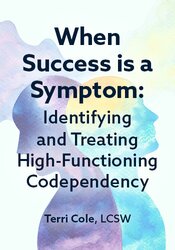
Digital Seminar
When Success Is a Symptom
Identifying and Treating High-Functioning Codependency
- Average Rating:
- 291
- Faculty:
- Terri Cole, LCSW
- Duration:
- 1 Hour 57 Minutes
- Format:
- Audio and Video
- Copyright:
-
Mar 21, 2026
- Product Code:
- NOS096701
- Media Type:
- Digital Seminar

Description
Not all clients come to us in crisis; some come to us in control. These clients are composed, competent, and high achieving, yet beneath the surface, they’re over-functioning in every area of their lives: fixing, managing, caretaking, and producing at an exhausting, relentless pace. This over-functioning pattern is rarely flagged as codependent because it presents as hyper-responsibility or “just being helpful.” But it often comes at a high cost: burnout, resentment, anxiety, and emotional disconnection. In this workshop, you’ll explore a clinically informed approach to help clients break this pattern of high-functioning codependency by building healthy boundaries, shifting from compulsive doing to conscious being, and engaging in sustainable self-care. You’ll discover practical interventions to reframe what healthy “helping” looks like by helping clients:
- Recognize “the competence mask” they present to the world and identify body cues that reveal relational stress
- Rewrite the internal narrative that conflates value with output
- Explore how chronic over-functioning erodes relational clarity and practice clinically grounded strategies for setting healthy, enforceable boundaries
- Engage in personalized self-care that guides them back into their bodies and helps prevent burnout
Credit
Faculty

Terri Cole, LCSW Related seminars and products
Terri Cole, MSW, LCSW, is a licensed psychotherapist and the author of Boundary Boss and Too Much! For over two decades, Terri has worked with a diverse group of clients that includes everyone from stay-at-home moms to celebrities and Fortune 500 CEOs. She reaches over a million people weekly through her blog, social media platform, courses, and podcast, The Terri Cole Show.
Speaker Disclosures:
Financial: Terri Cole maintains a private practice and receives compensation as a online course instructor. She is a podcast host of The Terri Cole Show. Terri Cole receives royalties as a published author. She has no relevant financial relationships with ineligible organizations.
Non-financial: Terri Cole is a member of the National Association of Social Workers. She is a contributing author and presenter with Psychotherapy Networker.
Additional Info
Access for Self-Study (Non-Interactive)Access never expires for this product.
For a more detailed outline that includes times or durations of time, if needed, please contact cepesi@pesi.com.
Questions?
Visit our FAQ page at www.pesi.com/faq or contact us at www.pesi.com/info
Objectives
- Identify high-functioning codependent behaviors, including the 'competence mask,' in therapy clients.
- Recognize early childhood patterns and relationship dynamics that drive codependent behaviors in adult clients.
- Apply emotional awareness techniques to help clients identify triggers and secondary emotions that fuel codependent reactions.
- Implement boundary interventions to help clients distinguish between healthy helping and codependent over-functioning.
Outline
Identifying & Understanding High-Functioning Codependency
- Define HFC: Why your capable clients don't relate to traditional codependency
- Recognize the "competence mask" - when doing everything looks like having it together
- Identify HFC traits: feeling responsible for fixing everyone's problems, giving 'til it hurts
- Spot the behaviors: auto-advice giving, auto-accommodating, anticipatory planning
- Distinguish caring from codependent - when "being helpful" becomes compulsive
Root Causes and Relationship Patterns
- Recognize family system dynamics that create HFC tendencies
- Identify the narcissist-codependent attraction and why it's so compelling
- Assess relationship patterns: over-functioning/under-functioning dynamics
- Help clients connect the dots between past experiences and current behaviors
The Real Costs and Wake-Up Calls
- Recognize when clients are living "life lite" - not fully present because they're managing everyone
- Assess the cost to clients: burnout, health issues, resentment, missing their own lives
- Understand the cost to others: turning people into projects, robbing them of autonomy
- Identify the "glass ceiling" HFCs create for themselves through compulsive behaviors
- Recognize crisis moments that can become breakthrough opportunities
Recovery Tools and New Ways of Relating
- Build emotional resilience: help clients recognize triggers and regulate responses
- Stop the "Auto-Fix" and practice empathetic listening instead of problem-solving
- Teach boundary skills: saying "that's not mine to solve" without guilt
- Practice surrender and allowing - letting others have their own experiences
- Create sustainable self-care that prevents relapse into HFC patterns
Target Audience
- Counselors
- Social Workers
- Psychologists
- Psychotherapists
- Therapists
- Marriage & Family Therapists
- Addiction Counselors
- Physicians
- Other Mental Health Professionals
Reviews
| 5 |
|
| 4 |
|
| 3 |
|
| 2 |
|
| 1 |
|
Overall: 4.8
Total Reviews: 291
Satisfaction Guarantee
Your satisfaction is our goal and our guarantee. Concerns should be addressed to: PO Box 1000, Eau Claire, WI 54702-1000 or call 1-800-844-8260.
ADA Needs
We would be happy to accommodate your ADA needs; please call our Customer Service Department for more information at 1-800-844-8260.
Please wait ...