

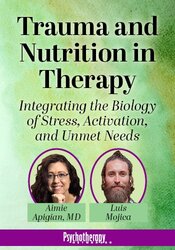
Digital Seminar
Trauma and Nutrition in Therapy
Integrating the Biology of Stress, Activation, and Unmet Needs
- Average Rating:
- Not yet rated
- Faculty:
- Aimie Apigian, MD, MS, MPH | Luis Mojica
- Duration:
- Full Day
- Copyright:
-
Jan 28, 2027
- Product Code:
- NOS096792
- Media Type:
- Digital Seminar - Also available: Live Webinar

Description
What your clients eat and drink affects many of the issues that bring them into therapy – and yet few therapists were ever taught to ask about it.
Three daily cups of coffee. A nightly piece of dark chocolate. A celebratory milkshake. These everyday habits can affect sleep, anxiety, energy, and emotional regulation in ways that often go unnoticed, by both clients and clinicians.
And the truth is -- the foods your clients reach for may reveal more than hours of conversation.
Join trauma expert Aimie Apigian, MD and nutritionist Luis Mojica for a practical, trauma-informed workshop and discover the hidden connection between food, cravings, and nervous system regulation. Over the course of the day, you’ll learn:
- How adrenaline and cortisol influence cravings, eating behaviors, and trauma symptoms
- What food choices can reveal about activation patterns, freeze responses and unmet needs
- How to recognize when clients are using food as a form of nervous system regulation
- Practical somatic interventions to help clients metabolize stress more effectively
- Ways to integrate these insights into your clinical work, even if you have no nutrition training
Register today to discover how these overlooked clues can help unlock new pathways to healing.
Credit
Faculty

Aimie Apigian, MD, MS, MPH Related seminars and products
Aimie Apigian, MD, MS, MPH, Double-board certified physician in preventive and addiction medicine with double master’s degrees in biochemistry and public health, Dr. Aimie Apigian is the leading medical expert on how trauma becomes our biology and what to do once it creates a chronic health condition.
Yet her inspiration comes from her personal experiences. Becoming a foster parent and adopting during medical school, and then experiencing her own health crisis in her early 30s, she has been on a journey to find practical tools and solutions, beyond the diagnoses, pills, and traditional therapies that weren’t addressing the root problem.
She now hosts a podcast, a YouTube channel, and online summits working closely with experts in the health and trauma space. She speaks around the world, leads groups through her programs to address stored trauma in the body, and teaches practitioners to do the same in her Biology of Trauma online training.
Speaker Disclosures:
Financial: Dr. Aimie Apigian is the owner and CEO of Trauma Healing Accelerated. She has an employment relationship with Walsh Research Institute, Biology of Trauma® Health Coaching, and is the host of Biology of Trauma® Podcast. Dr. Apigian receives royalties as a published author. She receives a speaking honorarium and recording royalties from PESI, Inc. She has no relevant financial relationships with ineligible organizations.
Non-financial: Dr. Aimie Apigian has no relevant non-financial relationships.

Luis Mojica Related seminars and products
Luis Mojica is a nutritionist and the founder of Holistic Life Navigation, a company that helps people learn what their cravings are telling them about their unmet needs, as well as how to use food as a form of therapy to recover from stress, trauma, and addiction. He works internationally, offering webinars, podcasts, courses and retreats. He’s the author of Food Therapy.
Speaker Disclosures:
Financial: Luis Mojica has an employment relationship with Holistic Life Navigation, LLC. He has no relevant financial relationships with ineligible organizations.
Non-financial: Luis Mojica is an author and presenter with Psychotherapy Therapy Networker. He is a member of Somatic Experiencing International.
Additional Info
Access for Self-Study (Non-Interactive)Access never expires for this product.
For a more detailed outline that includes times or durations of time, if needed, please contact cepesi@pesi.com.
Questions?
Is this in my scope of practice?
This training was built for psychotherapists, and it directly addresses what is and isn’t within their scope of practice. You’ll learn to notice, ask, and work with what food patterns reveal about the nervous system, using skills you already practice: curiosity, attunement, parts work, and somatic tracking. No health advice, meal planning, or diet recommendations. Plus, there’s a full section of the day dedicated to helping you recognize where your role ends and when to refer out.
Scope of practice varies by license and state, so review your licensing board’s guidelines as you apply these skills.
Visit our FAQ page at www.pesi.com/faq or contact us at www.pesi.com/info
Objectives
- Identify observable signs of an adrenaline response in clients during session.
- Categorize common foods and food behaviors as stimulants, depressants, or balancers based on their effects on the nervous system.
- Implement a step-by-step approach for guiding a client out of a functional freeze response during session.
- Apply titration and pacing techniques to help clients engage with emotionally charged sensations while minimizing the risk of retraumatization.
- Use a parts-informed, three-question craving inquiry to identify the unmet emotional or relational need a client's craving may be serving.
- Reframe a client's reflexive eating as a nervous system response using shame-free, non-prescriptive language.
- Determine when a client's food-related concerns warrant referral to a physician, dietitian, or eating disorder specialist.
Outline
The Biology of Cravings: Understanding Your Client's Internal Pharmacy• Adrenaline vs. cortisol: Why we've been focusing on the wrong stress hormone
• The window of activation: Mapping when food becomes self-medication
• Live demonstration: Reading cravings as nervous system communication
• Case examples: Coffee, sugar, and carbs as functional freeze breakers
Somatic Nutrition in Practice: Tools for Non-Nutritionist Therapists
• The Sociometry of cravings: Interactive group mapping exercise
• Three-category framework: Stimulants, depressants, and balancers in trauma work
• Glucose-stress tracking: Simple observation techniques for therapists
• Parts work adaptation: "Meeting the part that binges" demonstration
Clinical Integration: From Theory to Transformation
• Recognizing the "therapy day latte": What clients' pre-session foods reveal
• Histamine-trauma connection: Why some clients can't stop snacking
• Breaking the functional freeze-food cycle without dietary advice
• Creating safety without shame: Trauma-informed language for food behaviors
Considerations and Conscious Application
• Limitations of current trauma-nutrition research
• Scope of practice: Knowing when to refer to medical/nutrition professionals
• Cultural considerations in food and somatic interventions
• Potential risks: Avoiding re-traumatization through body-based practices
Target Audience
This training is designed for:
- Counselors
- Social Workers
- Psychologists
- Psychotherapists
- Therapists
- Marriage & Family Therapists
- Addiction Counselors
- Case Managers
- Physicians
- Nurses
- Other Mental Health Professionals



Reviews
Satisfaction Guarantee
Your satisfaction is our goal and our guarantee. Concerns should be addressed to: PO Box 1000, Eau Claire, WI 54702-1000 or call 1-800-844-8260.
ADA Needs
We would be happy to accommodate your ADA needs; please call our Customer Service Department for more information at 1-800-844-8260.
Please wait ...